
Escape the haunted mansion
Escape the Haunted Mansion is a solo or cooperative mystery game that drops players into the heart of a cursed, long-abandoned estate filled with secrets, supernatural dangers, and choices that matter.
You awaken inside the mansion with no memory of how you got there. The doors are locked. The air is cold. And something… is watching. As you explore the eerie hallways and forgotten rooms, you must collect clues, solve puzzles, and make critical decisions to escape — all while uncovering the dark history of the mansion itself.
Creative process
Escape the Haunted Mansion began with a simple idea: what if a board game could recreate the tension, mystery, and thrill of exploring a cursed mansion, but with hidden dangers at every turn? I wanted to blend the immersive atmosphere of a ghost story with the replayability and decision-making of a strategy game. And also make it single and multi-player
1. Concept of the game
The idea for Escape the Haunted Mansion began with a simple childhood memory, a game my mother once taught me. It was purely based on chance, played solo, and while simple, it was surprisingly fun. That memory stuck with me.
Years later, I thought: What if I reimagined it? What if I added strategy, narrative, and choice, and made it work for both solo and multiplayer modes? That’s when the real design work began. I started sketching out the game mechanics, defining outcomes, and calculating the number of cards needed. By blending luck with logic, mystery with tension, and story with gameplay, I began building something new, a haunting experience where every choice matters.
2. Cards designs
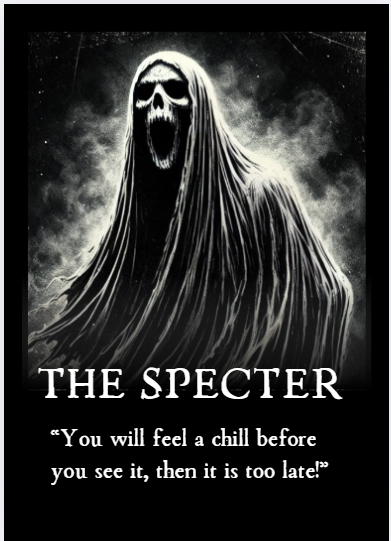
For the first version, I chose a simple and realistic design style,nothing too complex, just enough to bring the concept to life. I knew this wasn’t the final look, and I stayed calm throughout the process, understanding that this was just a starting point. I designed all the cards in this initial style to get a complete overview of the game’s structure and see where improvements were needed.
But once all the cards were laid out, it was clear something was off. The visuals felt flat, uninspired almost cheap. The gameplay had potential, but the design didn’t match the atmosphere I wanted to create. That’s when I realized it was time to rethink the visual identity completely.
3. Rules iteration
At this point, I also began questioning the game mechanics. After reviewing the gameplay, I realized it leaned heavily on chance, more than I had intended. To confirm this, I asked ChatGPT to simulate multiple game runs across all difficulty levels, and the results were clear: it was almost entirely luck-based.
That insight led to an important shift. I introduced new mechanics, adjusted the rules, and reworked several cards to strike a better balance between randomness and player input. The goal was to create a more engaging and strategic experience without losing the thrill of unpredictability.
However, while the gameplay was improving, the design still felt dull. The visuals didn’t yet match the intensity or theme of the game, and I knew the next big step was to bring the artwork up to the same level as the mechanics.
4. Cards designs 2.0
That’s when I started designing the first batch of new cards using Canva. I focused on creating a layout with an old Victorian feel ornate borders, a font that matched the eerie tone of the game, and illustrative images to bring each card to life. At first glance, it looked like progress. But once again, something felt off. The design didn’t hold together, and despite the effort, it still looked cheap and inconsistent with the game’s mood.
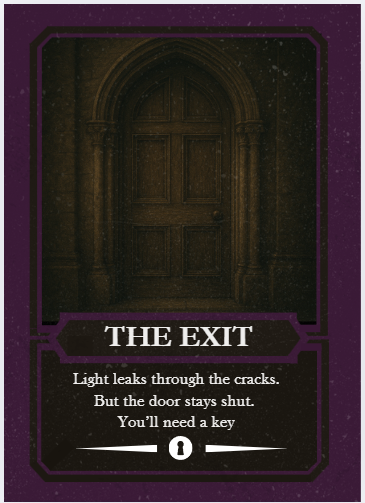
Unsure of the next step, I took a break and started researching old horror films and that’s when I found it. A visual style that instantly clicked: horror minimalism. Bold contrast, stripped-down imagery, and eerie silence in the design. It captured exactly what Escape the Haunted Mansion was meant to feel like. From that moment,
I committed to reworking every card in this new direction and for the first time, the design finally matched the atmosphere of the game.
Cards design 3.0 + next step
I decided to take a step back and view the game from a fresh perspective. That’s when I made a bold shift: I moved away from the original style and fully embraced a darker, horror-inspired, minimalistic design. This new direction better reflected the eerie atmosphere and psychological tension I wanted players to feel while playing Escape the Haunted Mansion.
The next step is to carry that minimalistic style into the full card design. Once all the cards are completed, I’ll do a final pass through the game rules to ensure clarity, balance, and flow. After that, the game will be ready for its first print and one step closer to haunting tabletops everywhere.